Columbus German Village Cedar Square Wins Contested 3-2 Vote
German Village commissioners voted 3-2 on Sept. 3 to approve Cedar Square's 52-unit concept at 251 E. Livingston, with opponents citing scale and a bylaws dispute.
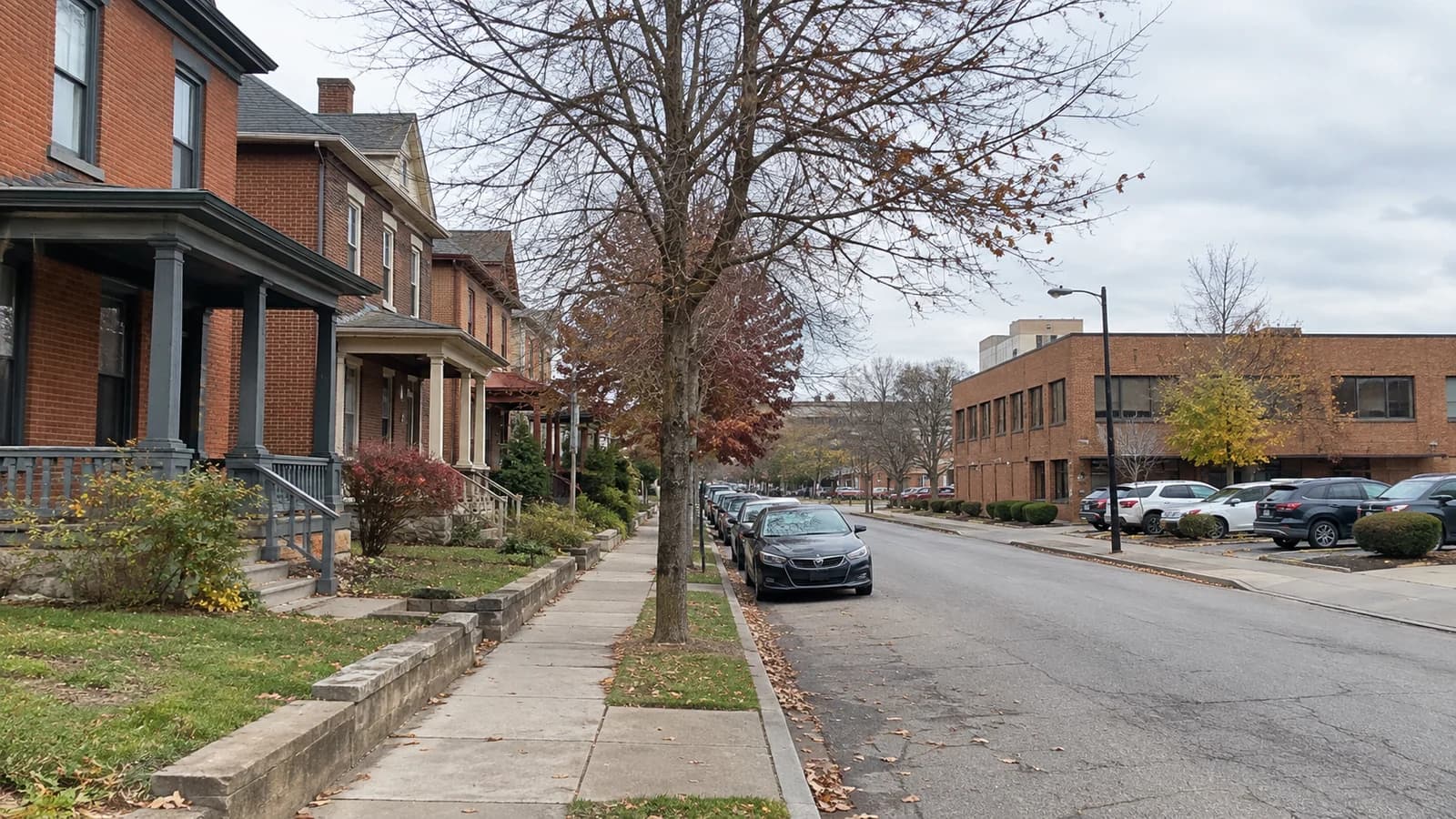
The German Village Commission voted 3-2 on September 3 to give conceptual approval to Cedar Square, Mershad Development's 52-unit, three-story proposal at 251 East Livingston Avenue. The applicant must return for an exterior-materials review, and opponents contend the commission's own bylaws required four votes for passage, not three.
What the Commission Approved — and What It Didn't
A conceptual approval from the German Village Commission means the body has accepted the building's basic footprint, massing, and design direction but has not signed off on the final materials palette, window details, signage, or lighting. Mershad Development must schedule a follow-up appearance before the commission with those specifics before receiving a final certificate of appropriateness. No demolition permit can be pulled on the existing office building at 251 E. Livingston until that second approval is granted.
The commission functions as an advisory body to the City of Columbus Building and Zoning Services division. Its recommendations on exterior design carry significant weight within the city's review process for the German Village Historic District, but the final legal authority to issue or deny building permits rests with the city.
The Project, Scaled Back Over More Than a Year
Cedar Square is Mershad Development's third iteration on this site. The original 2025 proposal called for a four-story building with 96 apartments; community pressure and commission feedback prompted successive reductions. The version approved September 3 is three stories and 52 units — mostly studios and one-bedrooms with a handful of two-bedroom units on the top floor — plus 61 parking spaces on a ground-floor garage and a small retail component fronting Livingston Avenue, according to Columbus Underground.
The building stretches approximately 327 feet east to west along East Blenkner Street, a span 614NOW compared to the length of a football field. That dimension anchors the opposition: German Village's streetscape is defined by shorter building faces and varied setbacks, and a 327-foot continuous wall at three stories is without precedent in the historic district.
The Vote-Count Dispute
The approval came with a procedural wrinkle that opponents may pursue. The German Village Commission's own bylaws state that four votes are required to pass a motion. Wednesday's vote was 3-2 — three in the majority, two opposed.
Before the vote, city staff consulted with the city attorney's office, which concluded that Columbus City Code supersedes the commission's bylaws on the vote-threshold question: under city code, a majority of the quorum present is sufficient for approval. With five members present, a three-vote majority met that standard, according to Columbus Underground.
The tension between the commission's written bylaws and the city attorney's interpretation is an unresolved procedural question. If opponents file a legal or administrative challenge arguing the bylaws govern, the status of the September 3 vote could become subject to review. No challenge had been announced as of publication.
Community Opposition: 750 Signatures and Documented Concerns
A neighborhood petition opposing Cedar Square in its current form had topped 750 signatures ahead of the September 3 vote, according to Hoodline. Petition organizers asked the commission and the city to reject the proposal and require a version that more closely follows German Village's traditional development patterns.
The objections documented in prior commission proceedings go beyond aesthetics. Residents have raised concerns about pedestrian safety on the neighborhood's narrow brick streets and alleys, emergency-vehicle access, and traffic from 61 parking spaces with unclear egress points. None of those concerns produced a substantive developer response in the public commission record reviewed for this story. NBC4 WCMH-TV reported on residents raising these issues in advance of the vote.
A Project With a Long Prior Record
The Cedar Square proposal has been before the German Village Commission for more than a year. An earlier scaled-down version was denied approval, according to Columbus Underground, and Mershad Development revised the project again before the September 3 hearing. The current three-story, 52-unit version reflects two rounds of concessions since the 96-unit original.
The length of the review process is itself significant context: a project that has faced denial and required multiple revisions over 14-plus months carries a different procedural standing than one seeing its first commission vote. Opponents have had extensive opportunity to document objections; the September 3 approval reflects those objections remaining unresolved in the commission's final tally, not being considered for the first time.
German Village Density in a Zone In Moment
Cedar Square's approval arrives while Columbus is running a 60-day public comment period on Zone In Phase 2, the city's sweeping zoning overhaul that opened August 25 and runs through October 24. Zone In Phase 2 aims to add housing capacity across a wider portion of Columbus — but the German Village Historic District operates under separate historic preservation rules that govern exterior design regardless of underlying zoning.
The disconnect between citywide density goals and neighborhood-scale historic preservation is a structural feature of how Columbus regulates its historic districts, not a contradiction the commission has authority to resolve. Cedar Square is a live illustration: the city's housing-production goals support adding 52 units of infill close to downtown transit and employment; the community and two commission members contend the building's mass is incompatible with the district's established character. The September 3 vote moves the project one step closer to a building permit while leaving the procedural question, the materials review, and the community opposition unresolved.
What Comes Next
Mershad Development must file a revised exterior-materials and design-details package and schedule a second German Village Commission hearing before a final certificate of appropriateness can be issued. The project cannot proceed to demolition or construction permits until that review is complete.
If a legal challenge to the September 3 vote is filed based on the bylaws dispute, it could pause or reset that timeline. No timeline for the follow-up commission hearing or for demolition has been released publicly. The office building currently at 251 E. Livingston Avenue and its parking lot would be razed before construction begins; no demolition permit has been pulled with Building and Zoning Services as of this writing.
German Village residents should expect at least one more commission proceeding on materials and design details before Cedar Square clears its final local approval gate.
Follow German Village
Get German Village housing, preservation, restaurant, and nearby-substitute alerts.
CREN uses this preference for email updates and measurement. It does not create a public profile.