Columbus Housing Goal Is a Target, Not a Measured Deficit
Columbus leaders set a regional goal of 200,000 homes over 10 years, but the figure should not be presented as a proven annual shortage.
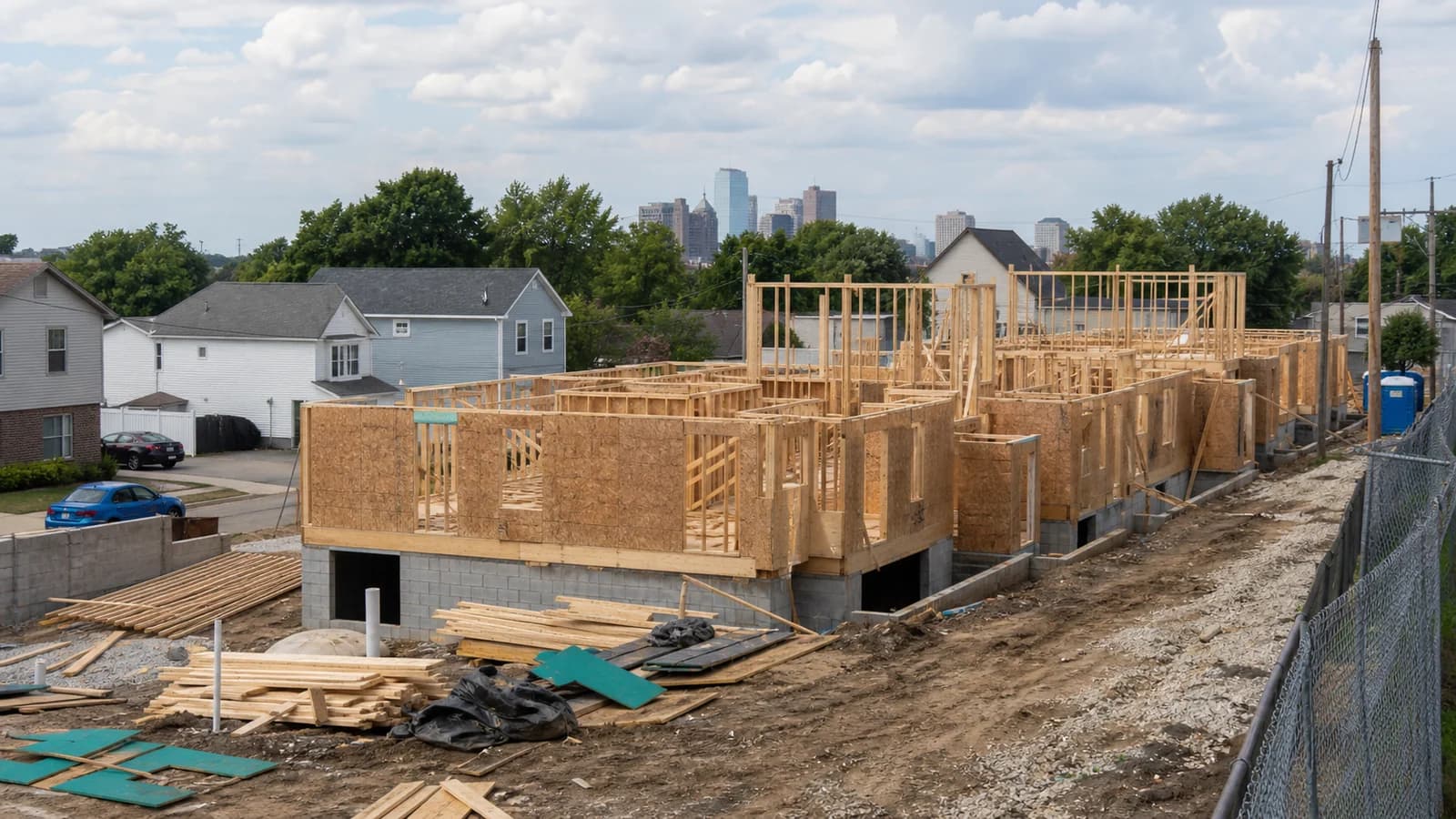
Columbus leaders have set a goal of 200,000 additional homes across Central Ohio over 10 years, equivalent to 20,000 per year. The figure is a policy target tied to growth expectations, not a published finding that the region is short exactly 20,000 homes in every calendar year.
The city states the goal directly
In his 2026 State of the City address, Mayor Andrew Ginther said the region should build 200,000 homes over the next decade and pledged that Columbus would account for half. He also said about 9,100 homes were authorized in the city during 2025.
Authorized units are permits or approvals, not necessarily completed and occupied homes. The annualized 20,000 figure is simple division, not a forecast of constant yearly production.
Population growth supplies the context
MORPC’s transportation plan projects the 15-county region growing from about 2.4 million residents to 3.1 million by 2050. Population forecasts contain assumptions and do not, by themselves, specify the exact number, price or location of homes required.
The original story blended that forecast with political statements and called the result a demonstrated supply gap. A defensible shortage estimate would publish household formation, vacancies, demolitions, second homes, affordability and geographic methods.
The coalition’s authority is limited
The City’s coalition announcement describes voluntary regional coordination among public, business and nonprofit participants. It does not give the coalition zoning or permitting authority over suburban governments.
The earlier story speculated about faster permits, investor returns and future zoning phases. Those predictions were not documented coalition actions and have been removed.
Progress needs a consistent ledger
Measuring the goal requires a public definition of home, geographic boundary and milestone. Permitted, started, completed and occupied units should not be combined.
The next useful record would be a coalition work plan that assigns responsibilities and publishes a repeatable production dashboard. Until then, 200,000 is an ambitious regional objective rather than a verified deficit count.
How CREN checked this account
This revision distinguishes originating records from commentary and promotional descriptions. It preserves source-specific uncertainty instead of combining unlike measurements or turning a stated intention into an outcome. The linked records let readers inspect the evidence available on the fact-check date; later schedules, designs and market conditions may differ.
CREN also removed transaction advice and claims about property values, rents, demand or economic effects when the sources supplied no reproducible analysis. A future update should use the same definitions and geography, identify any changed status and explain conflicts rather than quietly replacing the earlier record.
Keep up with your part of Columbus
Save the areas and topics you care about. Your picks shape what we cover next, and we email you when the Columbus brief starts going out.
Save my areas and topicsFree. The brief has not launched yet, so nothing lands in your inbox until it does.