Columbus Lower Olentangy Tunnel: $267M Project Reaches Final Weeks
Columbus's $267M Lower Olentangy Tunnel enters its final construction weeks. Here's what the five-year sewer project means for Near West Side flood risk.
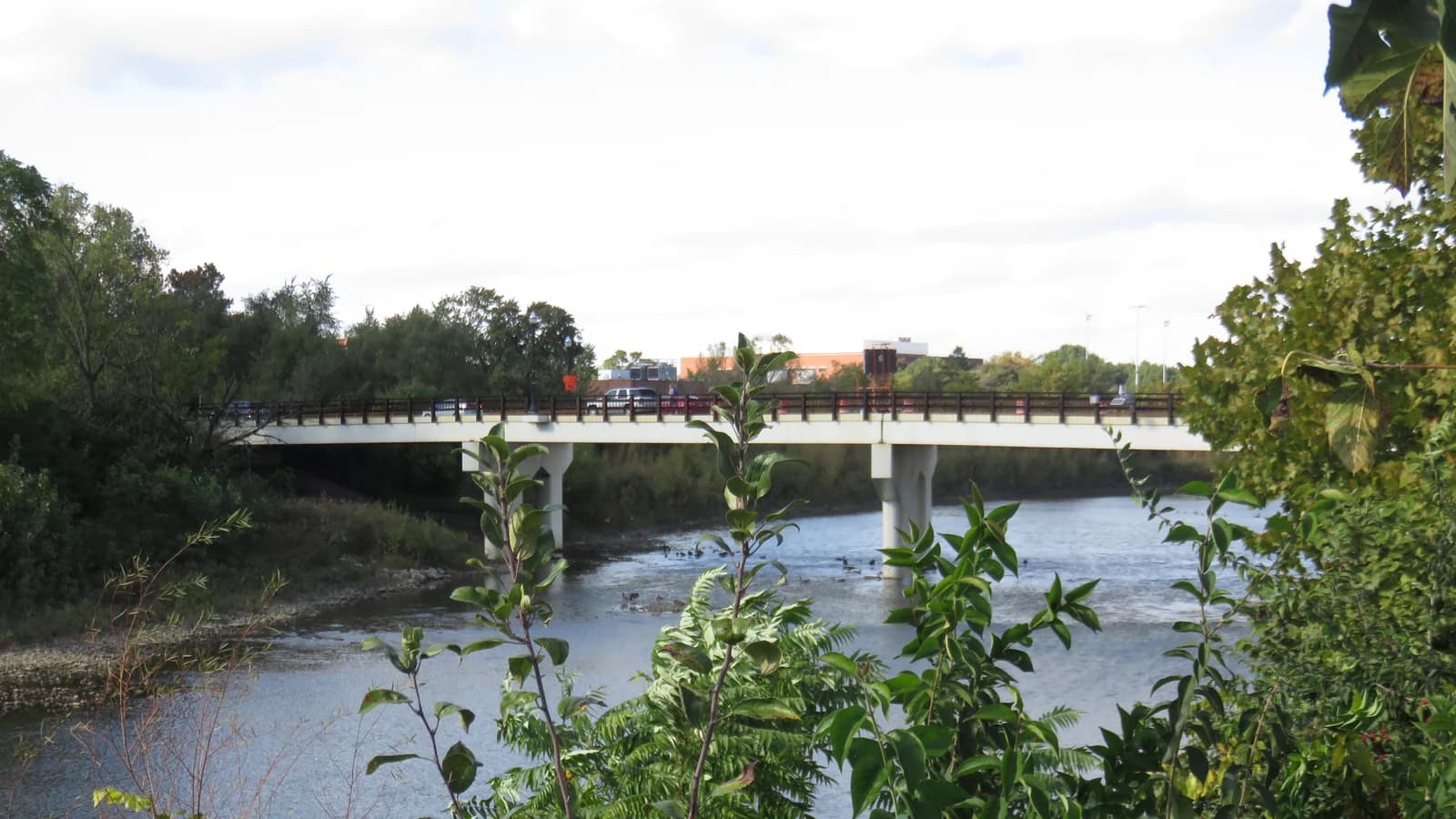
Columbus's Lower Olentangy Tunnel is entering its final weeks of construction, nearly five years after Granite Construction broke ground on the $267 million project. The 3.5-mile tunnel running beneath the Near West Side will reduce combined sewer overflows into the Olentangy River and is designed to cut basement flooding in Harrison West and nearby neighborhoods.
Five Years Underground
The City of Columbus Department of Public Utilities awarded the Lower Olentangy Tunnel (LOT) contract to Granite Construction in early 2021, with construction beginning that March. The contract value was $267 million. Funding comes from utility rates paid by Columbus water customers, supplemented by a below-market-rate loan from the Ohio Environmental Protection Agency.
The tunnel itself runs approximately 17,000 feet — just over 3.2 miles — at a depth of about 50 feet beneath the surface. The tunnel is 12 feet in diameter, large enough to hold back millions of gallons of stormwater before it reaches the Olentangy River. A tunnel boring machine excavated the route from south to north along the Olentangy corridor, reaching its northern terminus at Tuttle Park on June 4, 2025, according to WOSU Public Media. Construction crews have spent the year since completing internal infrastructure, lining, and commissioning work.
The city's stated target is for the tunnel to begin accepting water around September 2026. Granite Construction's own project updates confirm that substantial completion is scheduled for the end of September 2026, with final project closeout continuing into late 2026.
What the Tunnel Does — and Doesn't Do
Columbus, like many older American cities, operates a combined sewer system in its older neighborhoods. During heavy rain, stormwater and raw sewage share the same pipes. When the volume exceeds pipe capacity, the overflow — called a combined sewer overflow, or CSO — discharges untreated into local waterways, typically the Olentangy River.
The LOT intercepts those overflows before they reach the river. It captures the surge in a storage and conveyance tunnel, then slowly releases it to the wastewater treatment plant when capacity allows. The project addresses CSO discharge points at several Near West Side and Near North Side locations, including structures at First Avenue, Third Avenue, King Avenue, Indianola Avenue, Frambes Street, Doe Alley, and Hudson Street, according to the Clintonville Area Commission's project summary.
The system is designed to reduce CSO volume into the Olentangy, but it is not a flood control project in the strict engineering sense. The tunnel does not capture surface runoff or river flooding caused by external storm events. Basement flooding that is connected to sewer backup — which has historically been the most common complaint in Harrison West and parts of Italian Village — is the primary target. River flooding driven by upstream precipitation, like the events that prompted the Franklinton floodwall activation in August 2026, operates on a different pathway.
Three Shafts, Three Neighborhoods
The tunnel has three main access shafts, which also mark the key construction zones along the route. The southern shaft is at Vine Street near Olentangy River Road. The middle shaft is at Gowdy Field, near Third Avenue and Olentangy River Road — a site in Harrison West that has seen active construction staging for years. The northern shaft is at Tuttle Park, north of Lane Avenue in the University District.
Harrison West, bounded by the Olentangy to the west and Fifth Avenue to the north, has lived with construction disruption since 2021. The Harrison West Civic Association tracked the project through multiple construction phases. With commissioning underway, residents are now watching for restoration of disturbed surfaces, reconnection of utility connections, and the return of Gowdy Field to public use.
The tunnel route also runs beneath sections associated with the Italian Village corridor to the east and passes near Clintonville to the north. The Clintonville Area Commission has noted the project could eventually extend as far north as North Broadway, though the scope of this initial build ends near Lane Avenue.
The Property Angle
Basement flooding from sewer backup has been a documented concern in older Columbus neighborhoods on the Olentangy corridor. In Harrison West, where many homes were built in the early twentieth century, combined sewer infrastructure is a known factor in property condition disclosures and insurance costs for some parcels.
The tunnel does not guarantee that basement flooding ends. CSO-related backup is one cause; groundwater infiltration, inadequate lateral connections, and localized drainage issues are others. Property owners in the affected corridors will need to verify whether the primary cause of past flooding aligns with what the tunnel addresses.
CREN is not aware of a City of Columbus or Columbus Public Utilities study quantifying expected changes in basement flooding rates for specific Harrison West, Italian Village, or Clintonville addresses. Such data, if it exists, would be the most direct way for property owners to assess the tunnel's impact on their specific parcel. Columbus Public Utilities did not respond to a request for comment by publication time.
Regulatory Context
The LOT is part of Columbus's Long Term Control Plan (LTCP), a federally mandated program to bring the city into compliance with the Clean Water Act by reducing CSO discharges. The Ohio Environmental Protection Agency and the U.S. EPA jointly oversee the plan. Columbus negotiated the LTCP under a consent agreement framework common to older Midwestern cities where sewer infrastructure predates combined sewer separation requirements.
The below-market-rate EPA loan that co-funds the project comes through the Ohio Water Pollution Control Loan Fund (WPCLF), a state revolving fund. Projects of this scale typically carry multi-decade loan terms; the repayment comes through the same utility rate base that funded construction. Columbus water customers effectively financed this project through their monthly bills and will continue to do so over the loan repayment period, though the city has not published a line-item breakdown of the LOT share of average monthly utility costs.
What Comes Next
The tunnel is expected to begin accepting water this month. Granite Construction's substantial completion milestone is the engineering handoff; formal project closeout typically follows over the subsequent months as punch-list items are resolved and warranty periods begin.
For the neighborhoods along the route, the practical test will come during the next significant rain event — the first time the tunnel operates as intended rather than as a construction site. Harrison West's civic association is the most direct community monitor; its project update page has tracked milestone changes throughout the build.
Columbus Public Utilities has not released a public dashboard or community notification system for tunnel operations. The city's broader sewer improvement plan extends to other Columbus watersheds, but the LOT is the largest single project in the current capital cycle.
Have capital ready for Central Ohio real estate?
Tell us what you want your money doing and we will bring you Columbus opportunities that match. We only work in Central Ohio, and we tell you what does not fit.
Start the conversationThis is educational and is not an offer to sell or a solicitation to buy any security. We never promise returns.