Columbus Releases ADU Handbook as Report Says Sewer Rules Keep Backyard Home Costs High
Columbus has a new how-to handbook for backyard homes, but a policy group says city sewer rules still make ADUs cost more here than in four peer cities.
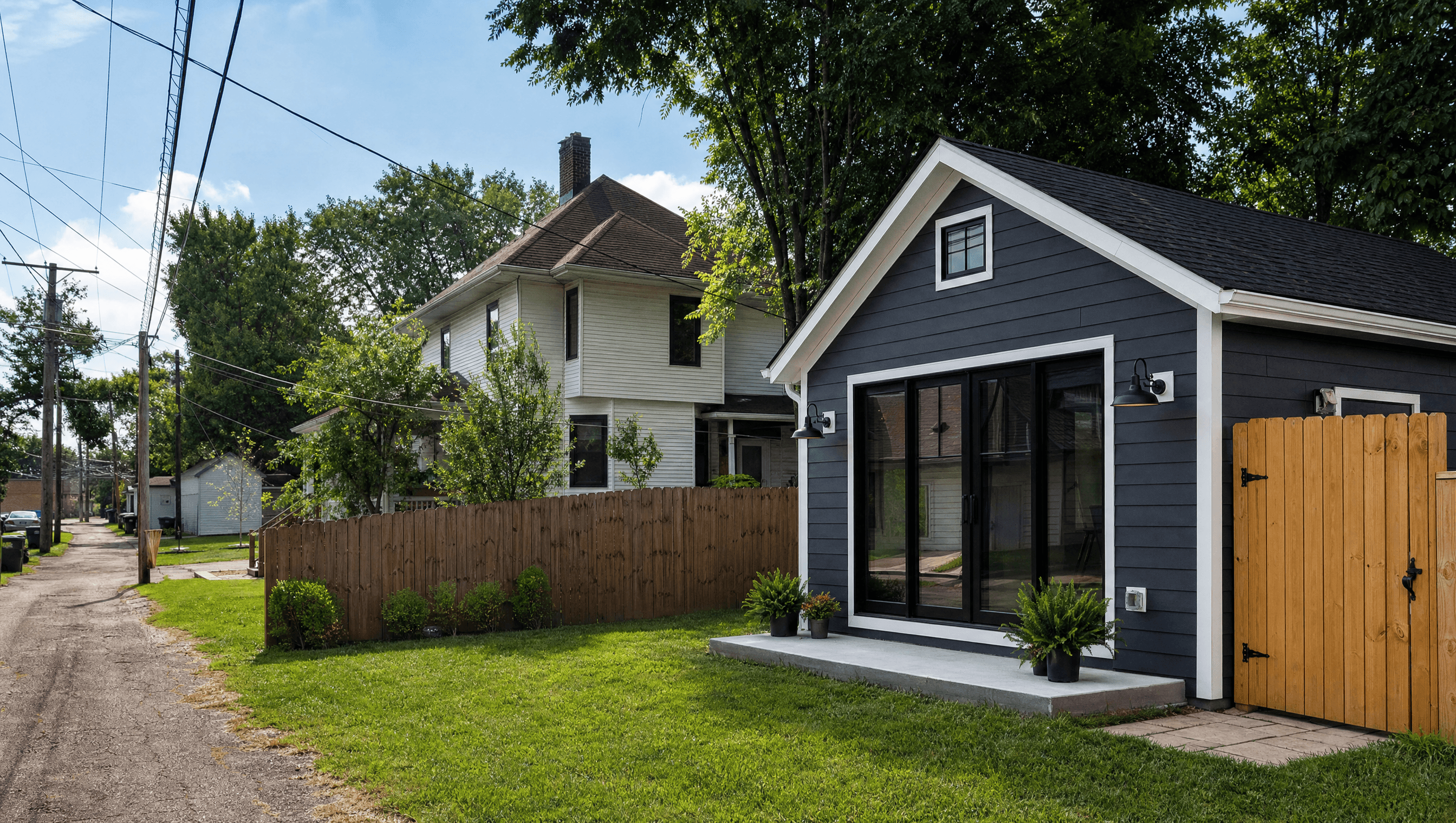
Columbus wants more backyard homes, and now it has an instruction manual. The city has posted a new handbook that walks homeowners through building an accessory dwelling unit, or ADU, as reported by Columbus Underground. An ADU is a small second home on the same lot as a main house. Think of a backyard cottage, a garage apartment, or a basement unit with its own door.
According to Columbus Underground, the handbook was produced by California-based Opticos Design under a $50,000 city contract. It uses photos and graphics to explain zoning rules, building-code steps, and what a project may involve from start to finish.
Why the city is pushing ADUs
The handbook follows a big rule change. On November 24, 2025, Columbus City Council passed Ordinance 2526-2025, sponsored by Councilmember Otto Beatty III. It allows ADUs "by right" in all of the city's residential and apartment residential districts. By right means a homeowner who follows the rules no longer needs a special variance, which is a case-by-case exception that used to require a long approval process.
The old process kept numbers tiny. City records attached to the ordinance show that from 2019 to 2025, only 110 ADU variances were approved citywide, and just 57 permits were issued. The new units must stay "clearly accessory and subordinate in scale" to the main home, and building permits are still required. Homes in historic districts, such as German Village, also need a Certificate of Appropriateness, WOSU reported.
The sewer problem
A rule change and a handbook do not make ADUs cheap. A June 5 report from the Greater Ohio Policy Center looked at one cost most homeowners never see coming: the sewer line.
GOPC compared Columbus with four peer cities: Austin, Ann Arbor, Portland, and Boston. In those cities, an ADU can usually share the main house's existing sewer connection. Columbus does not permit that setup, based on how the city code and Ohio's plumbing code are read here. Instead, a Columbus ADU generally needs its own separate line, called a lateral, running out to the public sewer. Digging a new lateral means more excavation and more money.
GOPC says the savings from the shared setup "could be significant and possibly be the difference between a financially feasible and infeasible ADU project." In plain terms: for some homeowners, the sewer rule alone may decide whether the project pencils out.
What it means for Columbus homeowners
ADUs are one of the gentlest ways to add housing. They fit inside existing neighborhoods, and they can house an aging parent, an adult child, or a renter whose monthly check helps pay the mortgage. Homeowners weighing an ADU as a first income property can review our guide to putting money to work in Columbus real estate.
The city is betting on small-scale housing in a big way. ADU reform sits alongside the citywide Zone In rezoning, which could open room for 88,000 new homes along Columbus corridors. You can follow all of our growth coverage on our development topic page.
What to watch next
Watch whether the city or state revisits the plumbing-code reading that requires separate laterals. Advocates are pushing for that change, according to Columbus Underground. If it happens, the math on backyard homes across the city could improve overnight.
The takeaway: if you are ADU-curious, read the city's new handbook first, then ask Building and Zoning Services for a preliminary zoning review before you budget. Price the sewer connection early. It may be the biggest surprise cost in the whole project.
Stay Informed
Get the Columbus RE Insider newsletter — market data, neighborhood analysis, and investment insights delivered every Tuesday.
Subscribe Free