Franklinton Development Is Spreading Beyond One Megaproject
City records show several distinct housing and mixed-use projects moving through Franklinton, but they do not support one verified $365 million total.
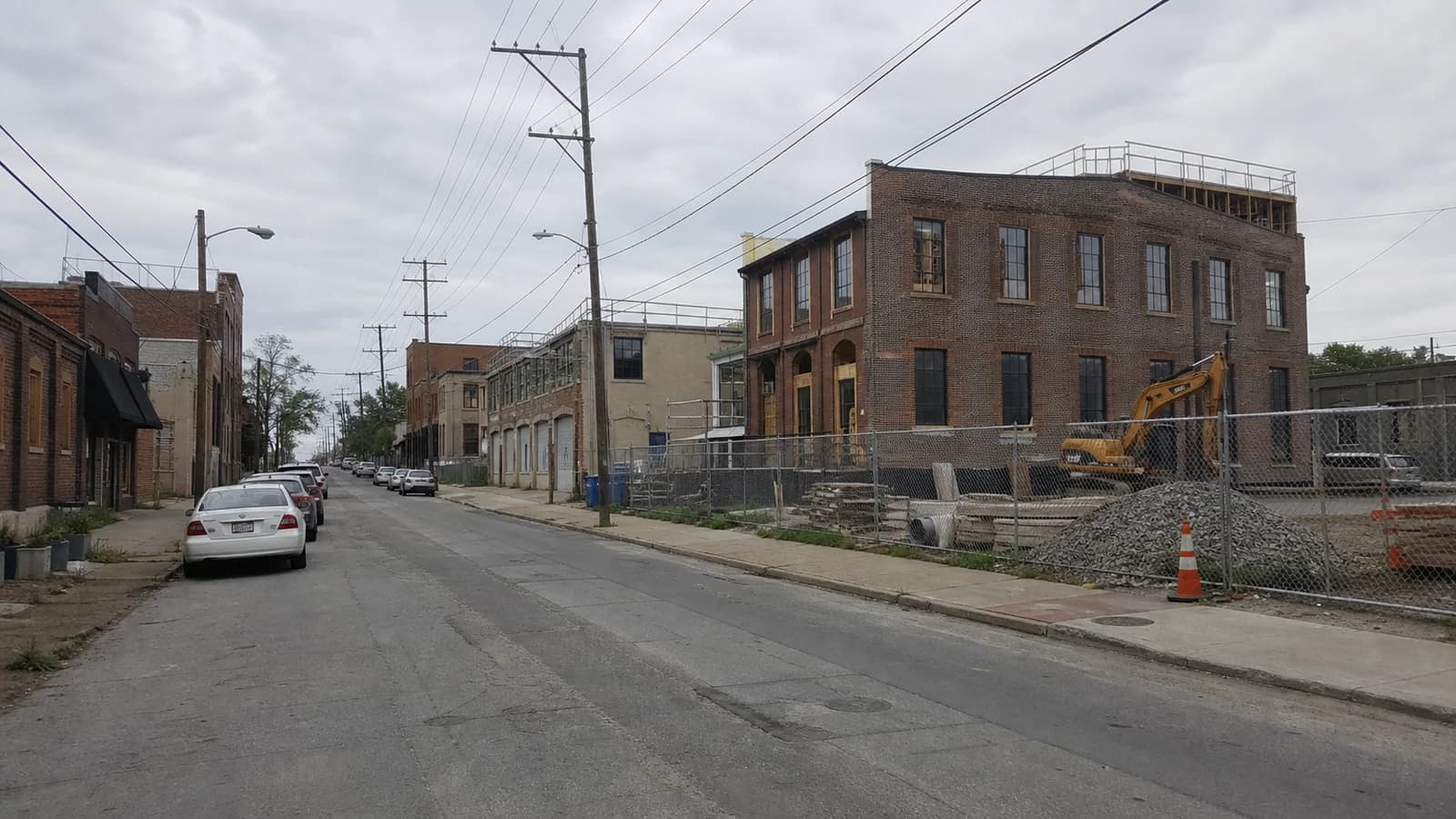
Franklinton’s development story is broader—and less tidy—than a single investment total. City records document a 313-apartment mixed-use project, a small affordable-housing grant and continuing design review, while separate reporting identifies more than 50 for-sale homes planned by a local builder.
What city records establish
The clearest current record concerns GreenHouse Gravity. Columbus City Council’s April 2026 bulletin describes a project with 313 apartments, 5,300 square feet of retail space and a 324-space parking garage. Council authorized up to $2 million for public parking, infrastructure, public art and place-making costs associated with the project.
That public contribution is not the total development cost. The ordinance documents a specific city expenditure and project program; it does not establish the combined private investment underway across Franklinton.
The same distinction applies to smaller housing work. A March 2026 council record authorized up to $600,000 for Franklinton Rising to build four affordable apartments in two duplexes at 157 and 175 Chicago Avenue. The record says the rents are intended for households earning 50% to 70% of area median income and that two units will be accessible at ground level.
For-sale construction is another part of the story
Development in Franklinton is not limited to large apartment buildings. Columbus Business First reported in September 2024 that New City Homes was building more than 50 homes and duplexes in the neighborhood.
That project represents a different tenure and scale from GreenHouse Gravity. Treating the homes, a mixed-use complex and a four-unit affordable project as one development can obscure who is building, what approvals apply and which residents each project is designed to serve.
Design review still shapes East Franklinton
East Franklinton operates under a creative-community district plan and a dedicated review board. The city’s East Franklinton Review Board page says the district plan was adopted in 2012 and publishes meeting calendars, agendas and minutes for project review.
Several meetings listed for early 2026 were canceled, which is a reminder that a calendar entry does not prove that a project received approval. The relevant evidence is the application record, staff recommendation, meeting result or enacted ordinance for each site.
Why CREN removed the $365 million claim
The previous version of this article presented Franklinton’s change as a verified $365 million transformation. CREN’s current source review did not find a reproducible ledger that defines which projects were included, prevents double counting and ties each cost to a primary record.
Without that work, adding announced project values creates a precise-looking number that readers cannot audit. This revision therefore reports documented projects separately and does not rank Franklinton against other Columbus neighborhoods by investment volume.
What to watch next
The most useful follow-up is project-specific: construction milestones and occupancy at GreenHouse Gravity, delivery and transfer records from the New City program, delivery of the Chicago Avenue affordable units, and dated decisions from the East Franklinton Review Board.
Those records will show what was actually built and occupied. They are more reliable than treating every proposal, subsidy and announced budget as money already invested in the neighborhood.
Follow Franklinton
Get Franklinton development, renter, investor, and local-change alerts.
CREN uses this preference for email updates and measurement. It does not create a public profile.