Intel Ohio Delay Leaves Land-Value Claims Hard to Prove
Intel moved its Ohio One production timeline into the next decade, but available public records do not support one countywide percentage for land-value losses.
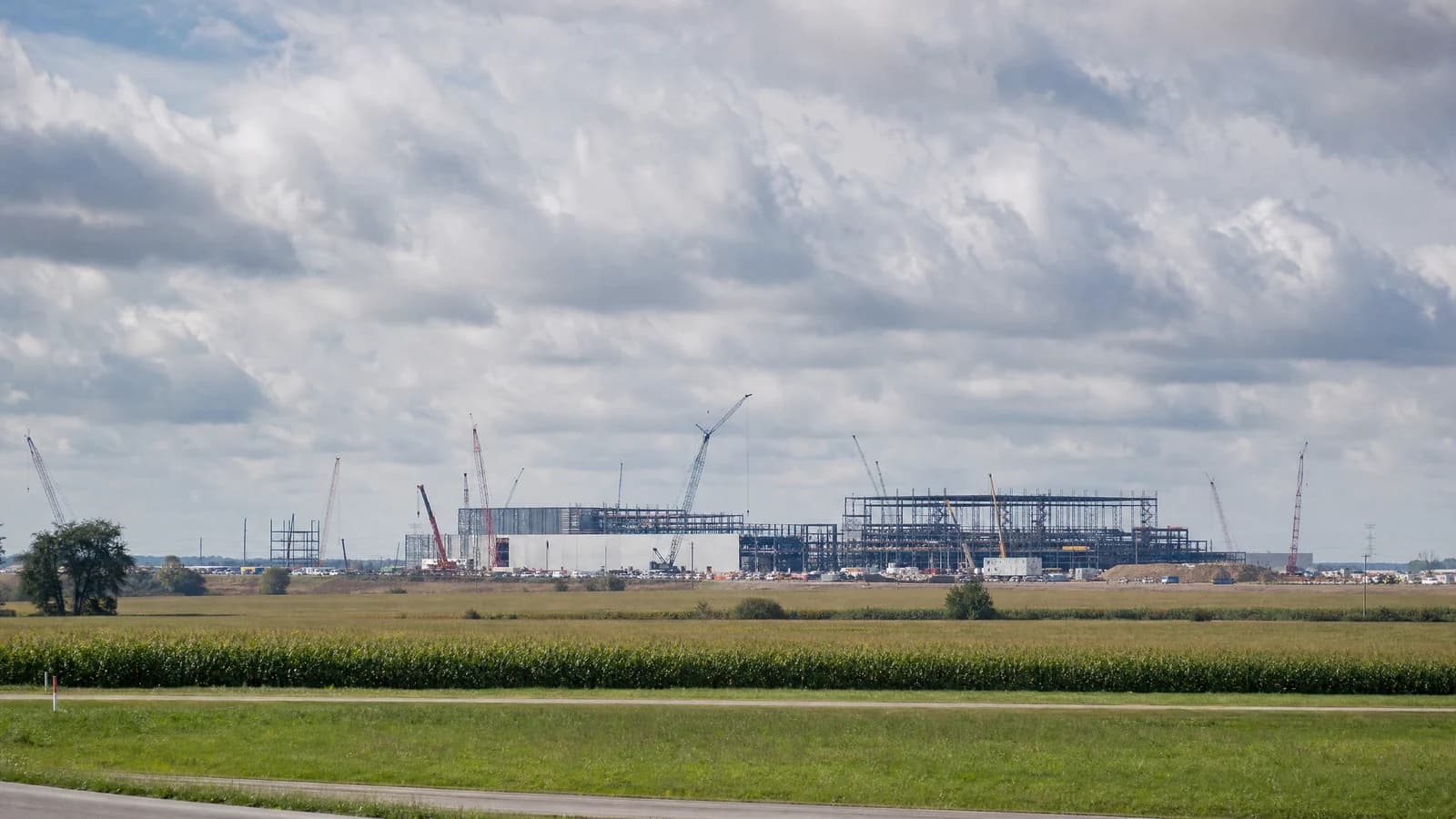
Intel’s slower Ohio One schedule has extended the wait for production into the next decade, but it does not establish a uniform decline in Licking County land values. Verifying that claim requires parcel-level sales analysis that separates Intel-related purchases from unrelated transfers and appraisals.
What Intel actually changed
In its February 2025 Ohio One update, Intel said it planned to complete the first fabrication module in 2030 and begin operations between 2030 and 2031. The company said it expected to complete the second module in 2031 and begin operations in 2032.
Intel described the site as a planned investment of more than $28 billion and said construction had continued since 2022. Its update attributed the slower schedule to aligning production with business and customer demand. Those statements establish Intel’s announced plan and rationale; they do not independently measure effects on nearby property.
Construction and regional preparation continue
WOSU reported in March 2025 that Intel had spent about $3.7 billion in New Albany and signed another $3.2 billion in contracts, citing a company letter to the Ohio Department of Development. WOSU also reported that Ohio had provided roughly $600 million in onshoring grants.
The article documented mixed local reactions. Some residents raised environmental and health concerns, while a county official said the extra time could help the region work on transportation, housing and workforce preparation. That reporting supports uncertainty and competing local consequences, not a single conclusion about land prices.
Why a countywide land-loss percentage is unreliable
Licking County’s Intel Area Purchases map identifies parcels connected to several purchasing entities and links users to county property records. The map notes that a recorded transaction can represent a transfer, split, merge, plat or annexation—not necessarily an arm’s-length sale.
A defensible price study would need to verify deed consideration, acreage, property rights, improvements, buyer relationships and sale conditions for each transaction. It would also need a comparison group outside the immediate project area and a clearly defined period before and after the schedule change.
The previous article claimed that CREN analyzed 340 transactions and that values fell about 50% from their peak. CREN could not locate the dataset, inclusion rules, calculations or archived output needed to reproduce those figures, so this revision withdraws them.
What the records support now
The supportable story is about timing and uncertainty. Intel’s published schedule moved major completion and operating milestones into the next decade while work and public investment continued. Individual owners may experience very different outcomes depending on location, zoning, utilities, buyer demand and the terms of a particular sale.
The next credible land-market update should begin with a downloadable parcel ledger and transparent methodology. Until that exists, specific sales can be reported as transactions, but they should not be generalized into a countywide value trend.
Thinking about selling?
Get a free offer on your Columbus home from local buyers. No 6% commission. On a $300,000 home that is roughly $18,000 that stays in your pocket. You pick the closing date.
Get my free offerThe offer is free and there is no obligation.