Columbus Grants $2.5M to Affordable Housing Trust After Bed-Tax Shift
Columbus City Council approved $2.5 million for the Affordable Housing Trust on November 16, the first year of a five-year, $12.5 million pledge.
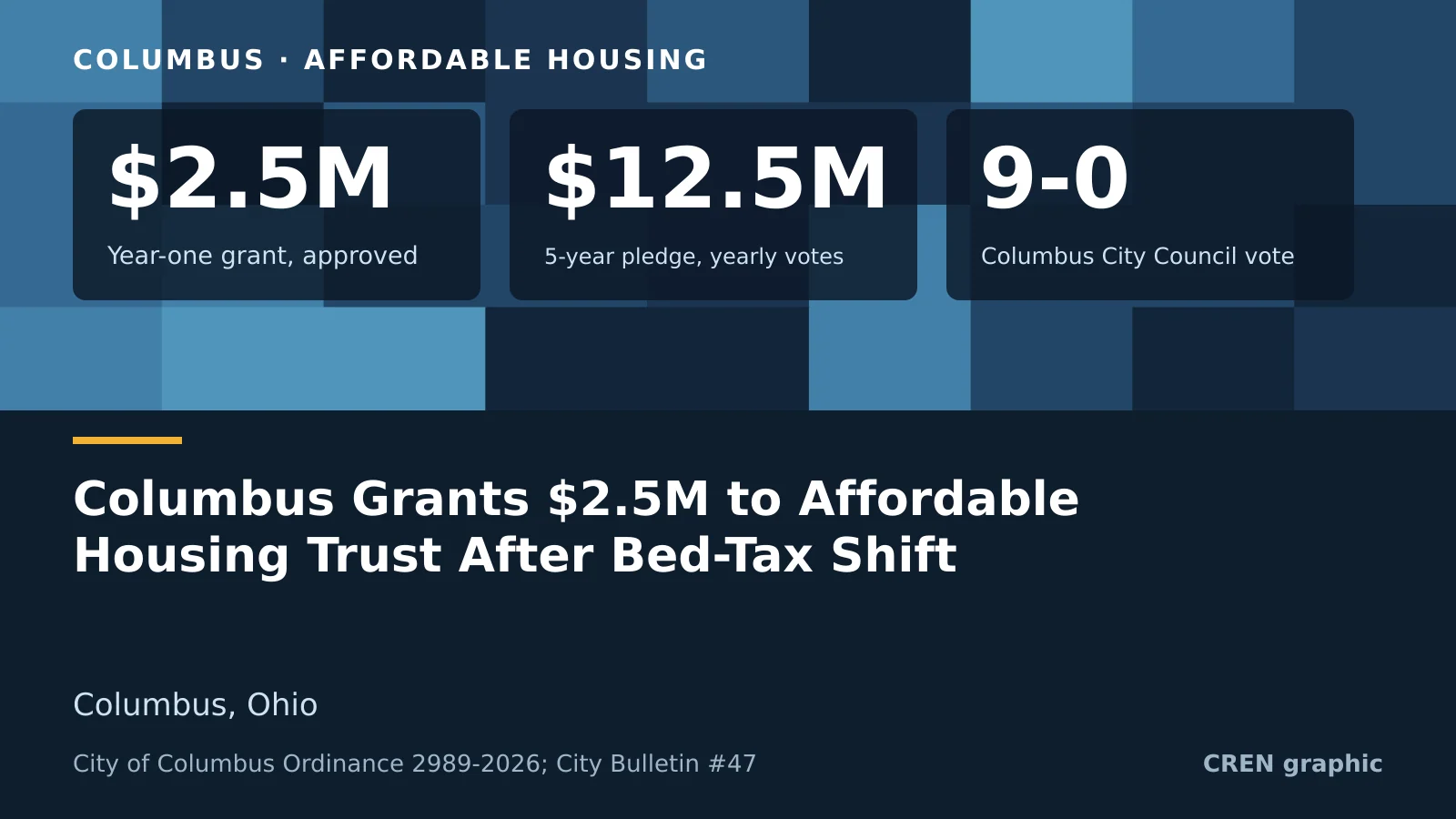
Columbus City Council voted 9-0 on November 16 to grant the Affordable Housing Trust up to $2.5 million, the first year of a five-year, $12.5 million pledge. The money replaces hotel-tax revenue the city shifted away from the trust in June, and each later installment still needs its own Council vote.
The grant runs through Ordinance 2989-2026, which Council passed as an emergency measure, one that takes effect immediately rather than after the usual waiting period, at its regular meeting. The acting mayor signed it the next day, on November 17, and the city clerk entered the final record on November 18. The payment is a capital contribution grant, a direct city contribution toward housing production rather than a loan or a tax credit, made to the housing trust that the city and Franklin County use to move public money into affordable rental and for-sale homes.
A tax share, replaced by a yearly vote
Until this year, the trust drew part of its budget automatically from Columbus's hotel-motel and short-term-rental excise tax, the lodging tax paid by hotel guests and short-term renters that is often called the bed tax. In June, Council passed Ordinance 2063-2026, which rewrote a section of the city code to redirect the trust's bed-tax distribution to Experience Columbus, the region's publicly funded tourism-marketing agency. That ordinance replaced an identical measure, Ordinance 1953-2026, that Council had adopted days earlier.
The change was one piece of a wider 2026 reworking of how Columbus splits its bed-tax dollars. A city Funding Review Advisory Committee report in March recommended raising Experience Columbus's overall share of the tax from 43 percent to 72 percent, WOSU reported. The enacted trust ordinance and that recommendation point the same way, toward more lodging-tax money flowing to tourism promotion.
Ordinance 2989-2026 is the other side of that move. Its text says the city redirected the bed-tax money while searching for a new funding stream to replace the trust's bed-tax distribution over the long term. The replacement it sets out is the five-year, $12.5 million commitment, but only the first $2.5 million is funded now. The ordinance says the later years are pending future availability of city funding and City Council approval, meaning a future Council would have to vote each installment into a budget. A dedicated tax share had renewed itself without an annual vote; this pledge does not.
What the $2.5 million can and cannot do
The grant is drawn from the city's Development Taxable Bonds Fund and moves up to $2.5 million out of an unspent road-project balance into a housing-trust account, according to the ordinance. Money left from an earlier budget year that was never spent, which the ordinance calls unvoted carryover, is being redirected to the new purpose rather than raised from a fresh tax or bond sale this year.
The ordinance does not name a single apartment complex or house the money will build; it authorizes a grant to the trust, which decides how the dollars are spent. It restates the trust's long-standing goal that half of the city's leveraged housing funding benefit households earning at or below 60 percent of the area median income, the income cutoff, set each year by the federal government, that defines who qualifies for most subsidized housing. The trust itself is not new: the ordinance's preamble traces it to a housing task force that Mayor Michael Coleman convened in May 2000 to design the city's first housing trust fund.
A condition the record leaves open
The authorization carries a condition. The ordinance states that the trust's contract compliance number, the city's certification that an organization meets equal-opportunity and related requirements before it can be paid, expired on October 30, 2026, and that the agreement depends on that certification being renewed. The November 21 City Bulletin that records the vote does not show the renewal, so the public record establishes the grant but not a cleared path to payment.
Two other limits sit in the record. The ordinances that moved the bed tax do not state the dollar value of the distribution the trust gave up, so the $2.5 million cannot be measured against that loss from the legislation alone. Because the trust allocates the money through its own decisions, the vote clears a transfer rather than a finished housing deal.
What to watch
The next checkpoints are specific public documents. Columbus's 2027 operating and capital budgets will show whether Council appropriates the pledge's second installment, the test of whether a one-year grant becomes the promised five-year, $12.5 million commitment. The trust's own award records will show which projects the first $2.5 million reaches, and an updated contract compliance filing will show whether the condition the ordinance set has been met. Each is a public record, and CREN will read them as they post.
Looking for a place to rent?
Tell us your budget and the areas you like. We send you Columbus rentals that fit what you can actually spend. Renters pay us nothing.
Find a rental